
Civil War (1922–1923)
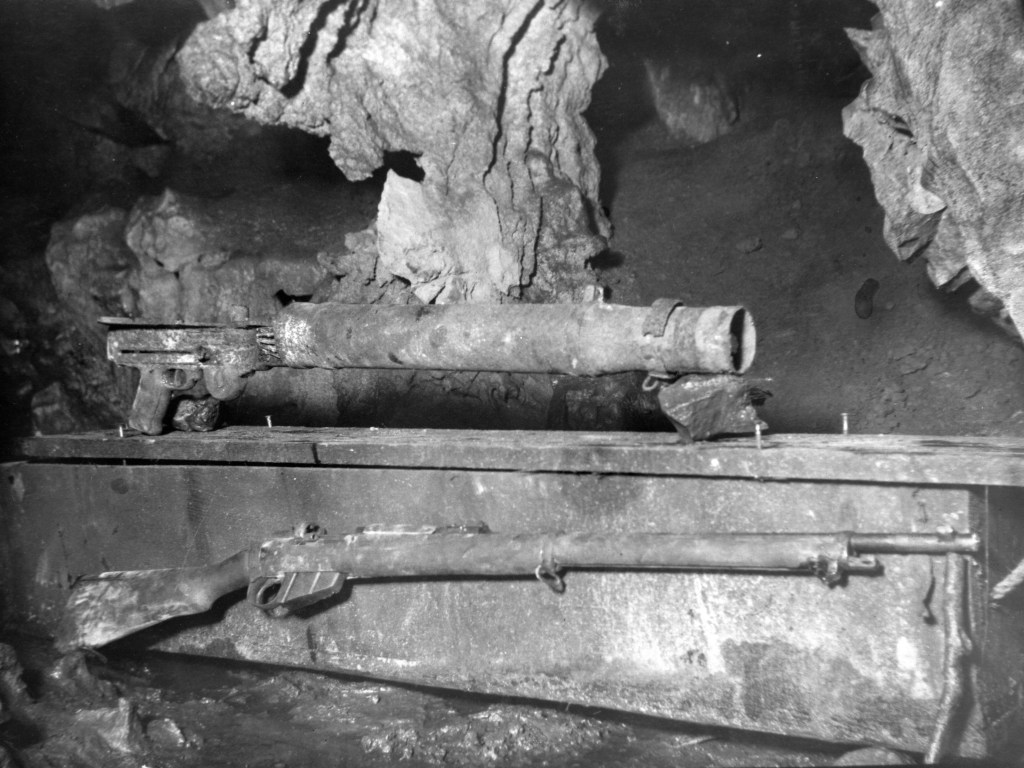
Many natural caves in isolated places in the landscape were appropriated as dugouts by the IRA during the guerrilla warfare of the War of Independence (1919-1921) and Civil War (1922–1923). As the centenary of the Civil War approached, together with colleagues James Bonsall and Robert Mulraney, we began the investigation of a natural mountain cave that had been used by the North Sligo IRA as a dugout during the revolutionary period. This was the first dedicated archaeological excavation of a Civil War site in Ireland, seeking to understand the archaeological discoveries within the historical and social context of the time, combined with the memories of surviving family members. En route to the cave, six IRA men were killed by the National Army; their 34 comrades reached the cave where they stayed undetected for six weeks in September and October 1922.
I am also increasingly interested in the supernatural phenomena that were reported in the wake of acts of extreme violence at this time, which often appear to be manifestations of trauma.
Dowd, M., Mulraney, R. and Bonsall, J. 2024. An Irish Civil War Dugout: Tormore Cave, County Sligo. Archaeology, History, Memory. Archaeopress, Oxford. Download book (free) here
Winner: Speleological Union of Ireland ‘Literary Award 2024’.
Winner: Sligo County Council ‘Cathaoirleach’s Award for Heritage and the Irish Language 2024’.
Mulraney, R., Dowd, M. and Bonsall, J. 2024. Tormore: The strategic use of a cave dugout during Sligo’s Civil War. In: H. O’Keeffe, J. Crowley, D. Ó Drisceoil, J. Borgonovo and M. Murphy (eds.) Atlas of the Irish Civil War: New Perspectives, 74–77. Cork University Press, Cork. Read here
Bonsall, J., Dowd, M. and Mulraney, R. 2022. The Six. The Lives and Memorialisation of Sligo’s Noble Six. Glencar Press, Sligo.
Dowd, M. 2023. Invoking the supernatural: Paranormal occurrences during Sligo’s revolutionary period. In: S. McKay and K. Hopper (eds.) A Door Opening: Sligo and the legacies of partition, 54–63. Sligo: Sligo County Council. Read here
Dowd, M. 2017. Caves, guerrilla warfare and the Irish revolution. In: J. Crowley, D. Ó Drisceoil and M. Murphy (eds.) Atlas of the Irish Revolution, 722–724. Cork University Press, Cork. Read here
Dowd, M., Moore, S., Sullivan, I. and Sullivan, S. 2017. Reinventing the souterrain: the reuse of monuments during the War of Independence. Archaeology Ireland 31(1), 26–30. Read here
Dowd, M., Mulraney, R. and Bonsall, J. 2022. Civil War cave hideout excavated – the Tormore Cave Project. Underground 102, 11–13.
Dowd, M. 2023. Revolutionary smoke. Scrimshaw. Journal of New Writing and Visual Art 2, 101.
Dowd, M., Mulraney, R. and Bonsall, J. 2024. Sligo house which was IRA HQ during Civil War and located just yards from RIC barracks is demolished. Sligo Champion, 17 July 2024. Read here
Dowd, M. 2022. Cave men: cave hideouts in the Civil War. https://www.rte.ie/history/2022/0830/1319586-cave-men-cave-hideouts-in-the-civil-war/
Dowd, M. 2020. How Ireland’s revolutionaries used caves to hide people and arms. RTÉ Brainstorm. Available at: https://www.rte.ie/brainstorm/2020/0922/1166727-caves-hideouts-ireland-war-of-independence-civil-war/
 Dr Marion Dowd